UNDERGROUND ROOF RUNOFF DRAINAGE
Downspout Drainage Installation in Spring, TX
Does rainwater pour from your downspouts beside the house or across your lawn? Drain Forge provides downspout drainage installation in Spring, TX, connecting roof-water outlets to underground drain lines that carry runoff toward suitable discharge locations. We plan each connection around your home’s layout, pipe route, and available drainage elevations.
Years of Experience
Projects Finished
Happy Clients
Customer Satisfaction
MOVE ROOF WATER AWAY FROM YOUR HOME
Give Rainwater a Better Route Beyond Your Downspouts
Your gutters collect rainwater from the roof, but the downspouts determine where that concentrated flow reaches the ground. A short outlet can release substantial runoff into one small area beside the house.
An underground downspout drainage system connects an existing downspout to a solid drainpipe. Instead of letting roof water discharge immediately beside the wall, the pipe carries it along a planned route toward an appropriate outlet.
Drain Forge considers the downspout connection, roof-water volume, available pipe fall, and discharge location before planning an installation.
COMMON DOWNSPOUT DISCHARGE PROBLEMS
When Your Downspouts Need a Better Drainage Connection
Roof Water Discharging
A short downspout outlet can concentrate rainfall near the foundation perimeter. A properly routed underground extension can carry that roof runoff to a more appropriate discharge location, subject to property conditions.
Downspout Extensions Crossing
Above-ground extensions can interfere with mowing, walking, and normal yard access. Where site conditions allow, a buried conveyance line can provide a less obstructive route for downspout water.
Downspout Water Reaching
An outlet that releases roof runoff beside a walkway can send concentrated flow across the walking surface. Rerouting that specific downspout may help direct the water toward a more suitable location.
DOWNSPOUT DRAINAGE COMPONENTS
How Underground Downspout Drainage Systems Work
An underground downspout system moves roof runoff from an existing vertical downspout through connected conveyance piping toward an approved discharge location.
Downspout Adapters
An adapter joins the downspout outlet to compatible drainage piping. The connection must accommodate the downspout dimensions and direct the water into the underground line without unnecessary restrictions.Connection details vary with the existing downspout shape, pipe material, and installation layout.
Solid Underground
Solid, nonperforated drainage pipe carries collected roof water along the planned underground route. Unlike a perforated collection pipe, it does not intentionally release water through openings along its length.Pipe size, material, fittings, and alignment must support the expected roof runoff and site conditions.
Discharge Outlets
The underground line needs a suitable destination for the roof water it carries. A daylight outlet, an appropriately designed emitter, or another permitted discharge arrangement may work depending on the property’s elevations and local requirements.The outlet must not redirect water onto neighboring property or toward vulnerable areas.
PLAN THE COMPLETE PIPE ROUTE
What Matters Before Installing an Underground Downspout Line?
The pipe route affects how efficiently the system carries roof runoff, how much excavation the project requires, and where the water ultimately leaves the property.
Roof Area
A downspout receiving runoff from a large roof section may carry more water than one serving a smaller area. The contributing roof area, connected downspouts, and expected rainfall influence pipe sizing and routing decisions.
Pipe Slope
A gravity-fed line needs a workable downhill route. Pipe alignment should avoid unnecessary low sections where water can remain and sediment can accumulate.The route must also account for buried utilities, walkways, landscaping, and appropriate installation depth.
Outlet Location
An underground pipe needs a practical and permissible discharge point. We consider available elevations, adjacent structures, property boundaries, and applicable drainage requirements before determining the proposed route.
OUR DOWNSPOUT DRAINAGE INSTALLATION PROCESS
How We Connect Downspouts to Underground Drain Lines
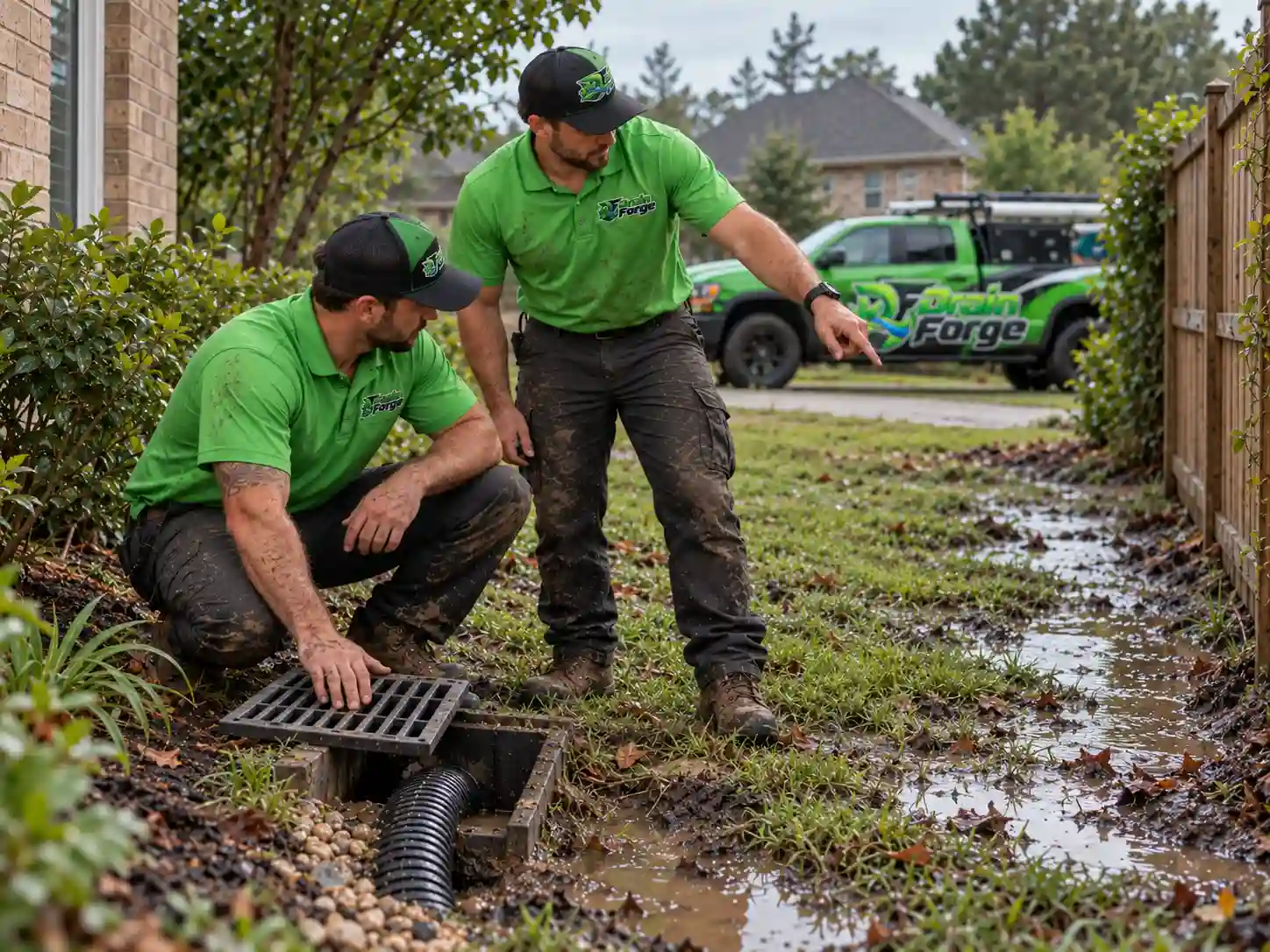

Assess Existing Downspout Outlets
We examine the selected downspouts, the areas where they currently release water, and the property’s available drainage routes to establish the installation requirements.
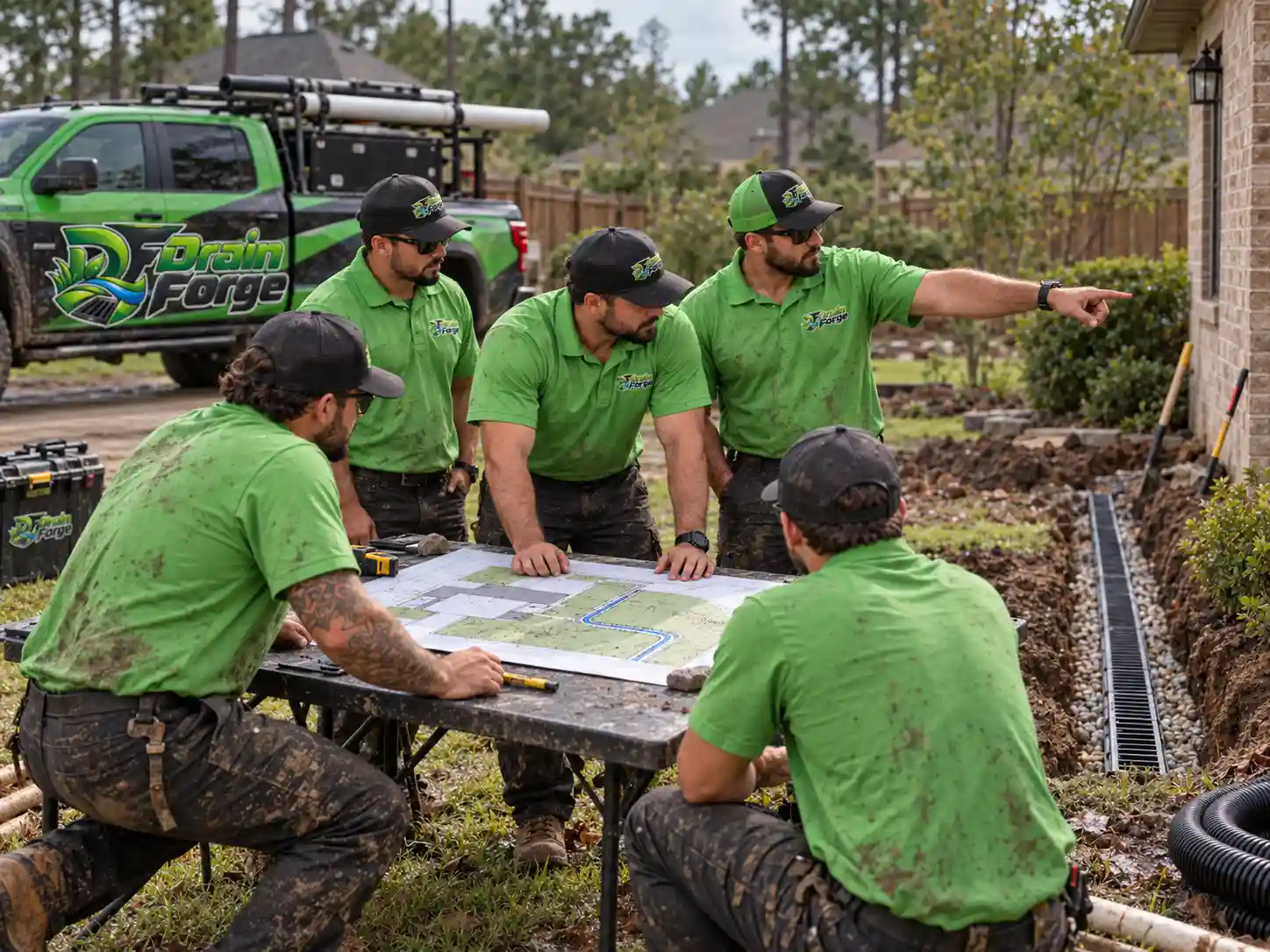
Map the Underground Pipe Route
Our team plans the pipe alignment, connection fittings, excavation path, available fall, utility clearances, and proposed discharge location before installation.

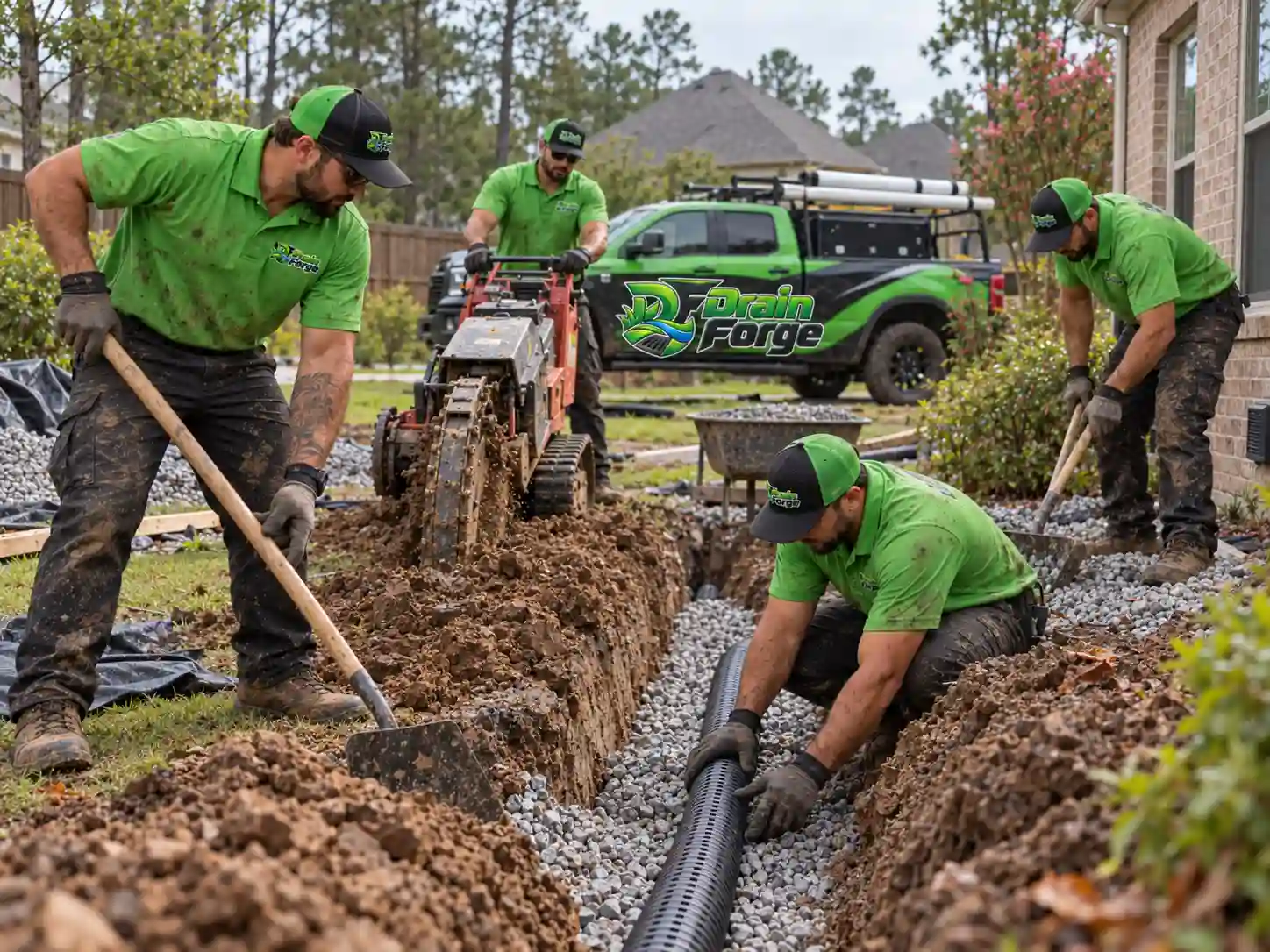

Install and Connect the Drain Line
We prepare the approved route, install suitable solid piping and fittings, connect the selected downspout outlets, and complete the planned outlet arrangement.
Review Connections and Restore the Route
We inspect accessible connections, pipe alignment, and the discharge arrangement. Where practical, we check water movement through the line before completing the agreed ground restoration.


Why Choose Drain Forge for Downspout Drainage Installation?

Roof-Water Routing
We consider where each selected downspout releases water and which underground routes offer a practical connection to an appropriate outlet.

Attention to Pipe
Downspout adapters, elbows, pipe alignment, and discharge fittings must work together. We account for these details when planning the underground conveyance system.

Clear Excavation
We explain the proposed connection locations, buried pipe route, affected landscaping, and outlet arrangement so you understand the planned installation work before it begins.
TESTIMONIALS
What Homeowners Say About Our Yard Drainage Work
★★★★★
Our backyard used to hold water after every heavy storm. The drainage work made a noticeable difference, and the whole process was explained clearly.
★★★★★
We needed a solution for our constantly soggy lawn. The crew explained the French drain installation and kept us informed throughout the project.
★★★★★
Our existing drainage system wasn’t working properly. The problem was identified, the necessary repairs were explained, and the experience was straightforward from start to finish.
★★★★★
Communication was clear, the crew treated our property with care, and we understood what was being done to address the drainage problem.
See How Downspout Drain Lines Connect and Discharge
Underground downspout installations combine visible connection points with buried piping. These examples illustrate the main stages of routing roof runoff away from a downspout outlet.
SPRING-AREA DOWNSPOUT DRAINAGE
Downspout Drainage Installation Around Spring, TX
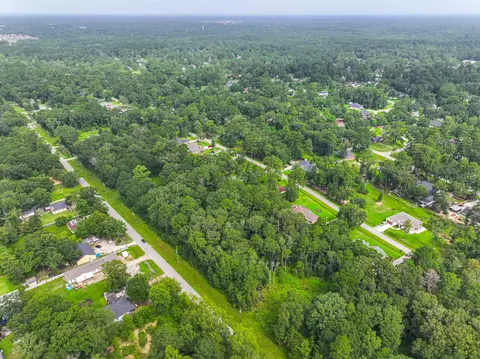
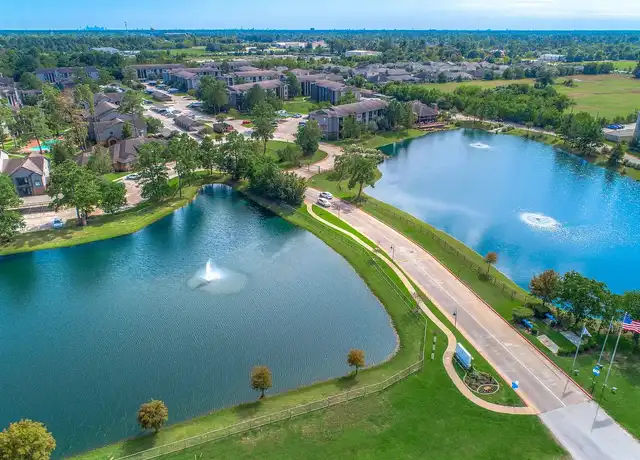
Homes around Spring can differ in roof layouts, downspout locations, yard elevations, and the space available for underground piping. These conditions determine how a roof-water line can travel from the downspout toward a suitable outlet.Drain Forge handles downspout drainage installation enquiries within its Spring-area service network. We consider each property’s existing outlets, underground access, and discharge conditions before recommending a pipe route.Call (229) 666-0167 with your property address and the location of the affected downspouts to confirm availability and discuss your drainage requirements.






DOWNSPOUT DRAINAGE INSTALLATION FAQS
Questions About Underground Downspout Drainage
Have questions? Use these accordion items as the editable FAQ framework.
Can I connect my existing downspouts to underground pipes?
In many cases, yes. Suitable adapters can connect existing downspouts to solid underground drainage lines. Pipe routing, available slope, and an appropriate outlet determine whether the installation is practical.
Should underground downspout drainage use solid or perforated pipe?
Solid, nonperforated pipe generally suits roof-water conveyance away from a house because it carries water without intentionally releasing it along the buried route. Specific pipe materials and fittings depend on installation conditions.
Where should an underground downspout pipe discharge?
The pipe should lead to an appropriate outlet that can accommodate the roof runoff. Property elevations, nearby structures, boundaries, and applicable drainage rules determine which discharge locations are suitable.
Can one underground drainage line connect multiple downspouts?
Yes, when the pipe layout and capacity can handle the combined roof runoff. The contributing roof areas, connection points, pipe dimensions, and outlet conditions all affect the design.
Does an underground downspout drain need a slope?
A gravity-fed drain needs a feasible downhill route toward its outlet. Poor alignment can create low sections that retain water and sediment. The available elevations determine whether gravity drainage is practical.
Will burying a downspout extension damage my lawn?
Installation requires excavation along the selected pipe route, which can disturb grass and landscaping. The amount of restoration depends on trench access, installation depth, and the agreed project scope.
CONTACT US
Ready to Transform Your Outdoor Space?
Use this section for the final conversion message, service-area summary, phone number and a direct quote request.